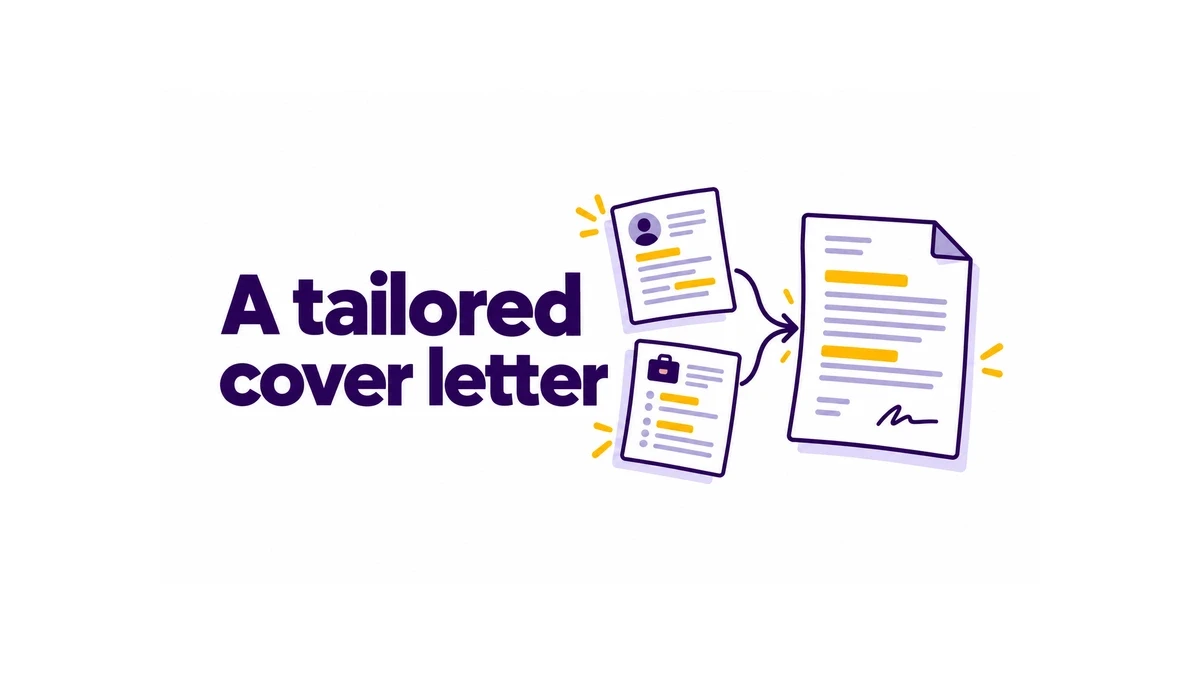
To create a cover letter from your CV, start with the job description. Choose two or three pieces of experience that answer the employer's priorities, then explain how that work prepares you for the role. Your CV supplies the evidence; the job advert gives your letter its focus.
You can do this yourself using the example below, or generate a letter through Reztune's CV-tailoring workflow. Reztune uses your background and the actual job description to create a tailored CV and an accompanying cover letter, so both documents make a consistent case for the same opportunity.
How to generate a cover letter with Reztune
Start with the CV you already have and the full job advert for the job you want:
- Add your base CV to Reztune. Include the experience you want considered. If relevant work is missing, add that context rather than expecting the software to know it happened.
- Paste the job description and tailor your CV. Reztune analyses the employer's requirements and connects them with your background. One tailoring credit generates both the fully tailored CV and a cover letter for that job advert.
- Review and edit before sending. You can edit both the CV and cover letter. Check the experience it highlights, the employer and role, and whether the wording sounds like something you would say. Any explanation of your motivation should reflect your actual reasons for applying.
The useful part is the context behind the writing. A career can include several kinds of relevant experience, and two employers hiring for the same title may value different parts of it. Reztune brings the candidate's background and the employer's requirements together in one workflow, then uses that context across the application.
That saves you from starting another writing task after tailoring your CV. You still decide whether the finished letter represents you accurately.
Here is what that connection looks like in practice.
Example: a cover letter created from a CV
The candidate, companies, job advert, and letter below are illustrative. This is a worked writing example, not a recorded Reztune output.
The candidate's CV
Jordan Lee
Operations Assistant | Harbour Home Supplies | June 2023–Present
- Coordinate weekly schedules for a 12-person shop team and communicate shift changes.
- Contact suppliers about delivery dates and discrepancies between orders and deliveries.
- Maintain Excel records of stock discrepancies and prepare weekly summaries using PivotTables.
- Write opening and closing checklists in Word for colleagues to use during their shifts.
- Organise team meetings through a shared Outlook calendar.
Education: HND in Business, 2023.
Tools: Excel, Word, Outlook.
Jordan also supplies one detail that is not in the CV: they particularly enjoy coordinating deliveries and resolving discrepancies, and want to make that work a larger part of their next role. They have not used SAP.
The job description
Northline Office Supplies is hiring an Operations Coordinator. This fictional job advert emphasises:
- Coordinating supplier deliveries and communicating schedule changes.
- Maintaining accurate order and stock records.
- Following up on discrepancies with suppliers.
- Preparing weekly Excel reports.
- Supporting consistent procedures across the operations team.
- SAP experience as a preferred qualification.
The overlap is substantial, even though Jordan's current title is Operations Assistant. The letter should make that overlap easy to recognise.
The finished cover letter
Dear Northline Hiring Team,
I am applying for the Operations Coordinator position at Northline Office Supplies. In my role at Harbour Home Supplies, I coordinate staff schedules, follow up with suppliers, and maintain stock discrepancy records. Your opening brings together the work I most enjoy: coordinating deliveries and helping resolve discrepancies so the team has clear information to work from.
Supplier communication is part of my current role. I contact suppliers about delivery dates and differences between orders and deliveries, and maintain the discrepancy records in Excel. That experience is directly relevant to your need for someone who can follow up on delivery issues while keeping the supporting records accurate. I also use PivotTables to prepare weekly summaries of stock discrepancies, which would be useful for the reporting responsibilities described in your job advert.
Alongside that work, I coordinate weekly schedules for a 12-person shop team and communicate shift changes. I have also written opening and closing checklists for colleagues to use during their shifts. These responsibilities have given me practical experience organising information that other people rely on, from a changed schedule to the steps in a daily procedure.
I would like to build on this background in a role with a stronger focus on delivery coordination and operational follow-through. Northline's combination of supplier communication, accurate records, and consistent procedures makes this opportunity particularly relevant to that direction.
Thank you for considering my application. I would welcome the opportunity to discuss how my experience could support your operations team.
Best regards,
Jordan Lee
Why these details belong in the letter
The letter gives the employer a clear connection between the work they need done and work Jordan has already done.
| Job advert priority | Evidence from Jordan's background | Choice in the letter |
|---|---|---|
| Supplier coordination | Delivery-date and discrepancy follow-up | Lead with this experience and explain its relevance |
| Accurate records and reporting | Excel discrepancy records and weekly PivotTable summaries | Connect the records to the reporting responsibility |
| Consistent team procedures | Opening and closing checklists | Use a concrete example of supporting colleagues |
| SAP preferred | No SAP experience supplied | Leave SAP out of the claims |
The letter does not need to repeat the qualification, every tool, or every CV bullet. The strongest evidence receives the space.
It also does not turn supplier follow-up into a claim that Jordan managed procurement, or turn weekly reports into an invented percentage improvement. The existing responsibilities are specific enough to explain the fit.
Jordan's reason for applying comes from their own stated interests and the work in the job advert. There is no invented story about admiring Northline for years. You can express a clear, credible interest in a job through the responsibilities themselves.
How to write a cover letter from your CV yourself
1. Identify what this employer needs most
Read the responsibilities and requirements before choosing what to write about. Look for the work the person will actually perform, the problems they will handle, and the qualifications the employer explicitly requires.
Choose two or three priorities that you can support with real experience. In Jordan's example, supplier coordination and accurate records deserve more space than a general claim about being organised.
If the job advert is long, start by separating its core responsibilities from preferred qualifications. Our guide to finding the important requirements and keywords in a job description shows how to make that distinction. A missing preferred tool should not distract you from explaining strong evidence for the main work.
2. Select the evidence from your CV
For each priority, find a responsibility, project, or achievement that shows relevant experience. Ask yourself: what did I do, what did it involve, and how does it relate to this job?
Use supported numbers when they clarify the work. Jordan's 12-person team gives the scheduling responsibility useful scale. If you do not have a measured result, explain the action, scope, tools, or people involved. You do not need to invent a metric to write a persuasive sentence.
Your CV may also be missing useful context. Add genuine details to your source material before writing, and make sure the two documents remain consistent. A cover letter can expand on an experience, but it should not introduce a different version of your career. If the CV itself needs work, see our guide to tailoring your CV to a job description.
3. Open with the role and your relevant background
Help the reader understand the connection immediately. Name the position and identify the part of your experience that prepares you for it.
You can use this structure:
I am applying for role at company. In my work as current or previous role, I have relevant responsibility and supporting experience. I am interested in this opening because truthful connection to the work.
Replace every placeholder and adjust the wording until it sounds natural. You do not need to describe yourself as the perfect candidate or list several enthusiastic adjectives. Give the employer something concrete to evaluate.
4. Connect your experience to the job advert
Use the body of the letter to develop your strongest evidence. Instead of copying a sequence of CV bullets, explain why the selected work matters for this opportunity.
A useful paragraph answers three questions:
- What relevant work have you done?
- What specific detail makes that experience credible?
- How does it prepare you for a responsibility in the job advert?
For Jordan, contacting suppliers is the work, delivery discrepancies are the detail, and the employer's follow-up responsibility supplies the connection.
Use the employer's terminology when it accurately describes your experience. Keep your actual level of responsibility clear: assisting a project and leading it are different claims.
5. Explain your interest and close simply
Your reason for applying can be the work, a particular area of responsibility, or an accurate detail about the organisation that matters to you. It does not need to be dramatic.
If you want more responsibility for work you already enjoy, say so. If you are changing direction, explain the relevant connection briefly. Avoid invented praise about a company's culture or mission when you have no basis for it.
Close by thanking the reader and inviting a conversation. Aim for a concise letter that fits comfortably on one page, unless the application asks for something different. Follow the employer's instructions for an attachment, email, or application text field.
Tailor the next letter to the next job advert
Now imagine Jordan applies to another Operations Coordinator opening. This one prioritises weekly stock reporting, Excel PivotTables, and procedure documentation. Supplier communication is a smaller part of the job.
The same background could support this paragraph:
In my current role, I maintain stock discrepancy records in Excel and use PivotTables to prepare weekly summaries. I have also written opening and closing checklists for colleagues to use during their shifts. Your emphasis on stock reporting and procedure documentation connects closely with both parts of my experience.
The facts have not changed. Their selection and emphasis have. Changing only the employer's name in the first letter would miss the second employer's priorities.
This is why we recommend tailoring the letter whenever you submit one. Keep a reliable base CV, then use each job advert to decide which evidence deserves attention in that application.
Reztune makes that process repeatable. The same CV-and-job context supports the tailored CV and cover letter, so you can focus on reviewing the application instead of reconstructing your argument for every employer.
Questions about creating a cover letter from a CV
Can I create a cover letter with only my CV?
You can create a general starting draft, but the actual job advert lets you choose evidence for a specific employer. Without it, you are guessing which parts of your background deserve the most space. For a tailored application, use both your CV and the job description.
How much of my CV should I repeat?
Repeat the facts that help explain your fit, then develop their relevance. The employer should recognise the same background in both documents. You do not need to recount every job or reproduce the whole experience section in paragraphs.
What if I have limited paid experience?
Use relevant projects, coursework, volunteering, or other responsibilities you can explain. Keep their context clear: a class project remains a class project. Show what you contributed and how it relates to the job advert, without presenting it as professional experience you have not had.
Check your letter before sending it
- The company and job title are correct throughout.
- The opening makes your relevant background clear.
- The body supports the job advert's priorities with specific experience.
- Titles, responsibilities, qualifications, and numbers agree with your CV.
- Your reason for applying is true and the wording sounds like you.
- No placeholders, unsupported claims, or details from another application remain.
- The final document follows the employer's submission instructions.
Read the CV and letter together once before applying. They should give the employer a consistent, specific picture of what you can bring to this role.
To prepare both through the same workflow, add your base CV and target job advert to Reztune's CV tailoring tool. Let the analysis give the application its focus, then review the result and make it yours.